Online D&D for Teens: A Parent's Guide
Teenagers are the sweet spot for online D&D for teens—old enough for real storytelling depth, young enough to benefit enormously from what the game teaches. If your teen has discovered Dungeons & Dragons through Stranger Things, a friend, or a school club, you may be wondering what online play looks like for this age group and how to find a group that's safe without being babyish.
This guide covers what parents actually ask us: what teen groups are like, how they differ from kids' groups, what the social and developmental benefits are, and how to evaluate any program—free or paid—your teen wants to join.
Why D&D Lands Differently With Teens
Ages 13–17 are when D&D stops being make-believe with dice and becomes something richer. Teens use the game to:
- Practice real social skills — negotiating with teammates, reading a room, handling a plan falling apart. The table is a low-stakes rehearsal space for social situations that feel higher-stakes at school.
- Develop executive function — tracking character abilities, planning heists, holding multi-session goals in mind. For teens with ADHD, the game is exercise for exactly the kind of muscles that school demands.
- Express identity safely — a quiet teen may play a brash bard; a teen figuring out who they are can try on personas at arm's length, which is exactly what they're supposed to be doing to develop.
- Earn genuine belonging — a consistent weekly group of peers who aren't grading, ranking, or excluding them. For many teens, that's the single most valuable thing in their week.
What Online D&D Groups for Teens Actually Look Like
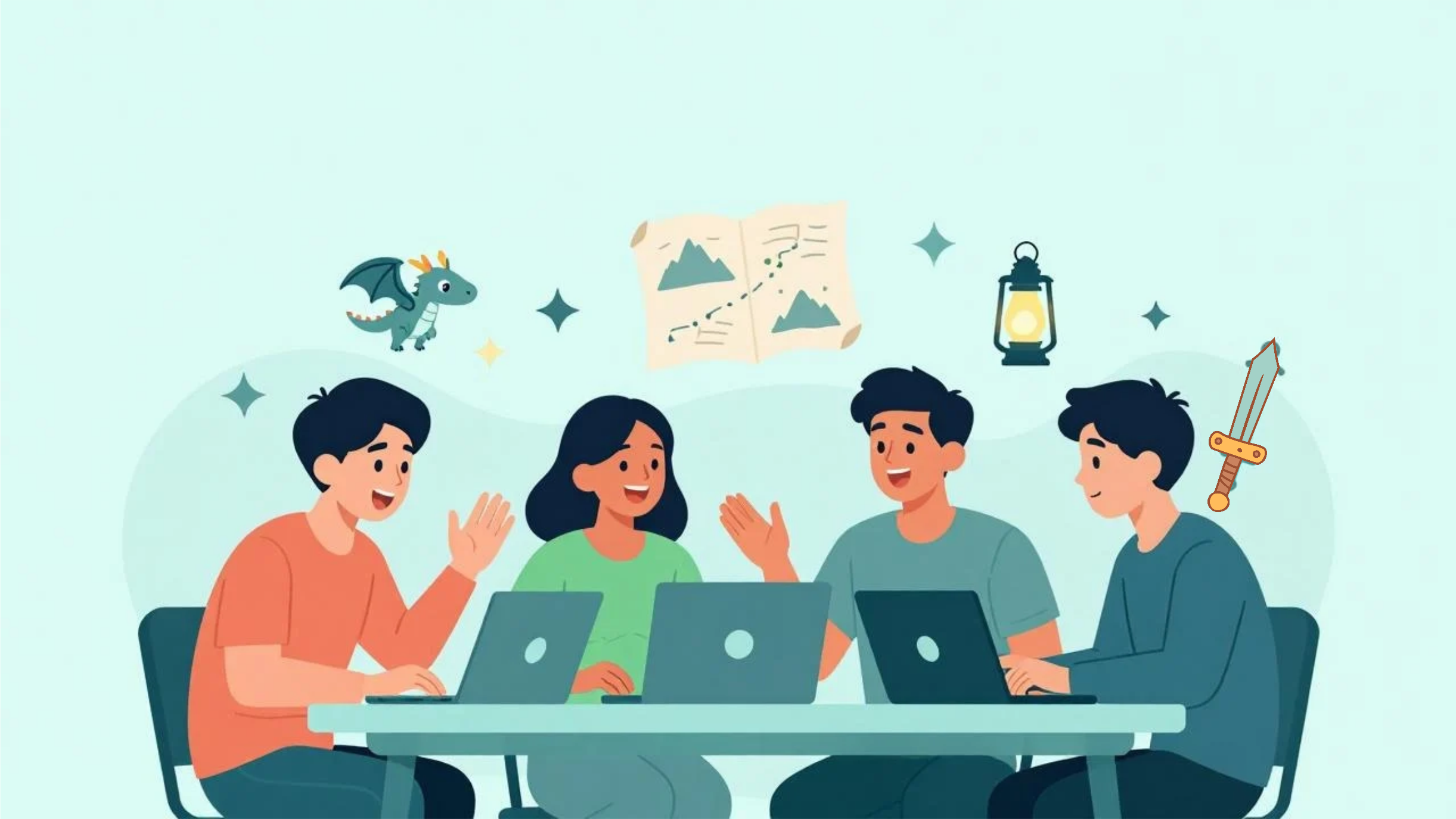
A typical online session runs 90 minutes to two hours on a video call with a shared digital map, or VTT (Virtual Table-Top). A group of four to six teens, roughly the same age, guided by a Dungeon Master. Sessions include combat encounters, puzzle-solving, and improvised role-play—and the story continues week to week, so friendships and in-jokes build over months.
What distinguishes a good teen group:
| Quality Marker | What to Look For |
|---|---|
| Age banding | Groups clustered tightly (e.g., 13–15, 15–17) rather than "ages 10–18" |
| Consistent membership | Many of the same players each week, not an open drop-in rotation |
| Content calibration | Themes pitched to teens—stakes and drama without gratuitous content |
| Voice inclusion | A DM who draws out quiet players and manages dominant ones |
| Parent transparency | Clear communication about what happens in sessions |
Safety for Teens: Different From Kids, Not Less Important
Parents of teens worry less about supervision and more about environment—who else is in the group, what's discussed, and whether the content stays age-appropriate. These are fair concerns! The basics to verify in any program:
- Are all Dungeon Masters background-checked?
- Are groups age-banded, or mixed with adults?
- Is there a code of conduct, and does someone enforce it?
- Can parents observe or ask about session content?
One platform note: Discord, where much online D&D happens, requires users to be 13+. That's why teen groups can use it while kids' groups generally shouldn't—but it also means the platform itself is designed for older users, so a moderated, invite-only server beats public ones for teen play.
Common Questions Parents of Teens Ask
"Isn't this just more screen time?"
It's screen time in the way a virutal book club is screen time. Or reading from a tablet. The screen is the table; the activity is collaborative, imaginative, and social. Many parents tell us online D&D replaced less purposeful screen time—one hour of shared storytelling instead of three of passive scrolling.
"My teen is shy. Will they have to perform?"
No. Players choose their own comfort level—describing actions quietly, speaking in character, or diving into full theatrical mode. A skilled DM meets each player where they are, and shy players often open up gradually in ways that surprise their parents. The game rewards participation but never demands it.
"My teen has ADHD. Can they handle a two-hour session?"
Frequently, yes—and many excel. The structure of turns, the visual map, the ongoing story, and the immediate feedback loops tend to hold attention that lectures don't. We've run groups where players with ADHD became the table's most engaged strategists.
"What if my teen has never played?"
Most teens in online groups started as complete beginners. Good programs include a one-on-one character creation session before the first game, so every player arrives knowing their character and at least one person—the DM.
"Can teens try it free first?"
Yes. Libraries, school clubs, and community programs sometimes offer teen D&D nights, and our free guide to free online D&D options covers the landscape honestly—what free routes deliver and where they fall short for consistent weekly play.
Free vs. Structured Teen Groups
The honest comparison, same as we give parents of younger kids:
| What Matters | Free Communities | Professional Teen Groups |
|---|---|---|
| Cost | $0 | Varies; ours runs $65/session with semester discounts |
| Age consistency | Mixed; often adult-heavy | Tight age bands with school-grade peers |
| Safety structure | Depends entirely on the community | Background-checked DMs, enforced conduct standards |
| Continuity | Volunteer-dependent; groups dissolve | Same night, same group, every week |
| Story depth | Varies wildly | Multi-month campaigns designed for teen players |
Free communities work well for self-directed teens who already know the game and can advocate for themselves in mixed-age spaces. Structured groups earn their cost when you want consistent peers, appropriate content, and a DM who notices when a usually-talkative player goes quiet.
How to Get Your Teen Started
- Gauge the interest. Show them this article or a video of actual gameplay. Teens self-select into D&D fast.
- Ask what they want — story and drama? tactical combat? a weekly hangout with a game attached? The answer points to the right group.
- Try a character creation session. It's the best no-commitment test: an hour building a character tells you and your teen whether this clicks.
- Find their group. One with consistent peers, a background-checked DM, and a weekly slot that survives exams and soccer season.
Teens don't need to be convinced D&D is fun—they usually figure that out themselves. What they need is a table that's safe, consistent, and treats them like the near-adults they're becoming. That's the whole job.
Find Your Teen's Table
Weekly online D&D groups for teens—consistent peers, age-appropriate campaigns, and a free 1:1 character creation session to start.
Explore Teen ProgramsLast updated: October 2026 | DMforAdventure — inclusive, high-quality Dungeons & Dragons sessions for players of all ages and skill levels.
